Annual Language Trip to the Folsom City Zoo Sanctuary

Please contact us at language@ssband.org to check on the availability of materials from this year's zoo trip or to ask us any questions.


Searchable table

The Folsom City Zoo Sanctuary is home to a wide range of native and non-native animals and plants. You can search the table below and listen to the Nisenan and Northern Sierra Miwok names for many of them. You can also download a copy of our zoo language map.

Heads-up! You can use the copy button ( ) to copy the name to your clipboard and you can click on the English name to find more information.

Nisenan English
UutiUutí
Acorn
WiitWɨɨt
Barn Owl
EmulEmúl
Black Bear
PikiPikí
Blue Oak
TolomaTolomá
Bobcat
MulkaMúlka
Bumblebee
KoowawaKoowáwa
Butterfly
PoloPoló
California Buckeye
MollokMóllok
California Condor
TayamanTáyaman
California Kingsnake
KookKook
Common Raven
OleOlé
Coyote
KutK’ut’
Deer
PiitoPiitó
Deergrass
SukkuSukkú
Dog
WuduuWudúu
Donkey
HawHaw
Fox
Oom KutOom K’ut’
Goat
PeyPey
Golden Eagle
KiihiKɨɨhɨ́
Gray Squirrel
LollaLollá
Gray Wolf
HimhimHɨmhɨ́m
Great Horned Owl
HilewHilə́w
Ground Squirrel
Woolem EepenWoolém Eepén
Honeybee
KawaayuKawaayú
Horse
BabakBabák
Interior Live Oak
HiisaHiisá
Mint
HilitHilít’
Mountain Lion
WeekwekWeekwék
Peregrine Falcon
CitokC’itók’
Poison Oak
EekƏək
Raccoon
Caam PalaalC’aam Paláal
Ringtail Civet
PuusaamPuusáam
Seep Monkeyflower
Kawim KapaK’awím Kapá
Tarantula
HiisHɨɨs
Turkey Vulture
LilLɨl
Western Redbud
KondaKónda
Western Screech-Owl
Petim WeneP’ətím Wené
Yarrow
EepenEepén
Yellowjacket
Miwok English
TeleeliṬeléeli
Acorn
WiicikiisiWíicikiisɨ
Barn Owl
UyyemiÚyyemɨ
Black Bear
MollaMólla
Blue Oak
TollommaTóllomma
Bobcat
MiilatiMɨ́ɨlaṭi
Bumblebee
HollokkitiwwaHóllokkiṭiwwa
Butterfly
UunuÚunu
California Buckeye
MollokuMólloku
California Condor
LaanakassaLáanakassa
California Kingsnake
KaakuluKáakulu
Common Raven
OlecuOlé’cu
Coyote
IwiiyaƗwɨ́ɨya
Deer
CiilipiCɨ́ɨlɨpɨ
Deergrass
CukuCúku
Dog
CekkesseCékkesse
Donkey
WaccihhaWáccihha
Fox
CiiwaCíiwa
Goat
WippayaakiWíppayaakɨ
Golden Eagle
MeeweMéewe
Gray Squirrel
HunnuHúŋŋu
Gray Wolf
TukkuuliTúkkuuli
Great Horned Owl
UpuksuUpúksu
Ground Squirrel
HaneHáne
Honeybee
KawaayuKawáayu
Horse
SaasaSáasa
Interior Live Oak
HiiliicaHíiliica
Mountain Lion
WekwekiWékwekɨ
Peregrine Falcon
NikiisiNɨkɨ́ɨsɨ
Poison Oak
PatkayiPátkayɨ
Raccoon
TiktikiTíktikɨ
Ringtail Civet
KuttuuluKúttuulu
Tarantula
HuusuHú’’usu
Turkey Vulture
LilliLɨ́lli
Western Redbud
TukummuṬukúmmu
Western Screech-Owl
MelnayiMélŋayɨ
Yellowjacket
Nisenan

UutiUutí

Acorn

WiitWɨɨt

Barn Owl

EmulEmúl

Black Bear

PikiPikí

Blue Oak

TolomaTolomá

Bobcat

MulkaMúlka

Bumblebee

KoowawaKoowáwa

Butterfly

PoloPoló

California Buckeye

MollokMóllok

California Condor

TayamanTáyaman

California Kingsnake

KookKook

Common Raven

OleOlé

Coyote

KutK’ut’

Deer

PiitoPiitó

Deergrass

SukkuSukkú

Dog

WuduuWudúu

Donkey

HawHaw

Fox

Oom KutOom K’ut’

Goat

PeyPey

Golden Eagle

KiihiKɨɨhɨ́

Gray Squirrel

LollaLollá

Gray Wolf

HimhimHɨmhɨ́m

Great Horned Owl

HilewHilə́w

Ground Squirrel

Woolem EepenWoolém Eepén

Honeybee

KawaayuKawaayú

Horse

BabakBabák

Interior Live Oak

HiisaHiisá

Mint

HilitHilít’

Mountain Lion

WeekwekWeekwék

Peregrine Falcon

CitokC’itók’

Poison Oak

EekƏək

Raccoon

Caam PalaalC’aam Paláal

Ringtail Civet

PuusaamPuusáam

Seep Monkeyflower

Kawim KapaK’awím Kapá

Tarantula

HiisHɨɨs

Turkey Vulture

LilLɨl

Western Redbud

KondaKónda

Western Screech-Owl

Petim WeneP’ətím Wené

Yarrow

EepenEepén

Yellowjacket

Miwok

TeleeliṬeléeli

Acorn

WiicikiisiWíicikiisɨ

Barn Owl

UyyemiÚyyemɨ

Black Bear

MollaMólla

Blue Oak

TollommaTóllomma

Bobcat

MiilatiMɨ́ɨlaṭi

Bumblebee

HollokkitiwwaHóllokkiṭiwwa

Butterfly

UunuÚunu

California Buckeye

MollokuMólloku

California Condor

LaanakassaLáanakassa

California Kingsnake

KaakuluKáakulu

Common Raven

OlecuOlé’cu

Coyote

IwiiyaƗwɨ́ɨya

Deer

CiilipiCɨ́ɨlɨpɨ

Deergrass

CukuCúku

Dog

CekkesseCékkesse

Donkey

WaccihhaWáccihha

Fox

CiiwaCíiwa

Goat

WippayaakiWíppayaakɨ

Golden Eagle

MeeweMéewe

Gray Squirrel

HunnuHúŋŋu

Gray Wolf

TukkuuliTúkkuuli

Great Horned Owl

UpuksuUpúksu

Ground Squirrel

HaneHáne

Honeybee

KawaayuKawáayu

Horse

SaasaSáasa

Interior Live Oak

HiiliicaHíiliica

Mountain Lion

WekwekiWékwekɨ

Peregrine Falcon

NikiisiNɨkɨ́ɨsɨ

Poison Oak

PatkayiPátkayɨ

Raccoon

TiktikiTíktikɨ

Ringtail Civet

KuttuuluKúttuulu

Tarantula

HuusuHú’’usu

Turkey Vulture

LilliLɨ́lli

Western Redbud

TukummuṬukúmmu

Western Screech-Owl

MelnayiMélŋayɨ

Yellowjacket


Language + notes

This section contains audio recordings of the Nisenan and Northern Sierra Miwok language that you’ll find on our SSBMI Language signage at the Folsom City Zoo Sanctuary, as well as informational notes. You can also download a copy of our zoo language map.


Animals housed at the zoo

Barn Owl

Nisenan

Wɨɨt

Miwok

Wíicikiisɨ


Black Bear

Nisenan

Emúl

Miwok

Úyyemɨ

Heads-up: You may have also heard the words kapá (Nisenan) and ɨsɨ́ɨmaṭi (Miwok) used to talk about bears before. Those names refer to grizzly bears and all bears in a generic sense. The names emúl (Nisenan) and úyyemɨ (Miwok) are specific to black bears.


Bobcat

Nisenan

Tolomá

Miwok

Tóllomma


California Kingsnake

Nisenan

Táyaman

Miwok

Láanakassa


Common Raven

Nisenan

Kook

Miwok

Káakulu

Esak’ábe mi? (Do you know?) The names kook (Nisenan) & káakulu (Miwok) are two of many onomatopoetic bird names, meaning that they resemble a call that the bird makes. You can learn more about onomatopoeia in Nisenan and Miwok bird names here.


Coyote

Nisenan

Olé

Miwok

Olé’cu

Esak’ábe mi? (Do you know?) The word olé is from the Valley and Southern Hill dialects of Nisenan. In the more northern dialects of the Nisenan language, speakers call coyotes dáppe. While all Northern Sierra Miwok speakers call them olé’cu, some speakers have also shared the name aséeli as an alternate form; this may be a dialect variant or a borrowing from another language.

Nisenan

Dáppe

Miwok

Aséeli


Deer

Nisenan

K’ut’

Miwok

Ɨwɨ́ɨya


Dog

Nisenan

Sukkú

Miwok

Cúku

Esak’ábe mi? (Do you know?) The wolves at the Folsom Zoo are actually wolf-dog hybrids.


Donkey

Nisenan

Wudúu

Miwok

Cékkesse


Fox

Nisenan

Haw

Miwok

Wáccihha


Goat

Nisenan

Oom K’ut’

Miwok

Cíiwa


Golden Eagle

Nisenan

Pey

Miwok

Wíppayaakɨ


Gray Wolf

Nisenan

Lollá

Miwok

Húŋŋu


Great Horned Owl

Nisenan

Hɨmhɨ́m

Miwok

Túkkuuli


Horse

Nisenan

Kawaayú

Miwok

Kawáayu

Esak’ábe mi? (Do you know?) Some of the animals at the zoo, like goats and horses, were introduced to California only in the last few centuries. To name some of these animals, Nisenan and Miwok speakers borrowed their Spanish or English name and adapted it to the sounds of their language. Both names for "horse" are from the Spanish word caballo, which is why they sound alike!


Mountain Lion

Nisenan

Hilít’

Miwok

Híiliica


Peregrine Falcon

Nisenan

Weekwék

Miwok

Wékwekɨ


Raccoon

Nisenan

Əək

Miwok

Pátkayɨ


Ringtail Civet

Nisenan

C’aam Paláal

Miwok

Tíktikɨ

Esak’ábe mi? (Do you know?) The Nisenan name c’aam paláal literally means "tree cottontail", coming from the words c’aa (tree, stick, wood) and paláal (cottontail rabbit).


Tarantula

Nisenan

K’awím Kapá

Miwok

Kúttuulu

Esak’ábe mi? (Do you know?) The Nisenan name k’awím kapá literally means "ground bear" or "ground grizzly bear", coming from the words k’aw (ground) and kapá (bear, grizzly bear).


Turkey Vulture

Nisenan

Hɨɨs

Miwok

Hú’’usu


Western Screech-Owl

Nisenan

Kónda

Miwok

Ṭukúmmu


Honeybees and other bees

The Folsom Zoo hosts two colonies of honeybees, but did you know that honeybees are an introduced species? At the Folsom Zoo Language Trip, we shared signage highlighting two families of native bees (bumblebees and yellowjackets) and their Nisenan and Northern Sierra Miwok names.

Bumblebee

Nisenan

Múlka

Miwok

Mɨ́ɨlaṭi


Yellowjacket

Nisenan

Eepén

Miwok

Mélŋayɨ

Esak’ábe mi? (Do you know?) Roasted yellowjacket larvae is a traditional food source. According to Nisenan and Miwok speakers who were interviewed in the 1930s, an adult yellowjacket would be baited with meat and tagged using a grasshopper leg painted white or with grass tied to it; this made the yellowjacket more visible as it flew away and allowed hunters to follow it to its nest.


What do you call a Honeybee? All the honeybees you see around you are European honeybees (A. mellifera), and they are an introduced species.

When a new species is introduced to an area, speakers have many options for naming it. Sometimes speakers come up with a new name for that species, or they may adapt a word from another language, like Spanish or English.

William Joseph (a.k.a. Bill Joe), a Nisenan man from Amador County, adopted the first of these strategies and called honeybees woolém eepén. This name literally means "European yellowjacket", reflecting his knowledge of the origin of this species.

Northern Sierra Miwok speakers adopted the second of these strategies by adapting the English word "honey" and calling honeybees háne.

Honeybee

Nisenan

Woolém Eepén

Miwok

Háne


Other insects

There are butterflies at the zoo and bug boxes for other bugs to nest in. Here are the Nisenan and Northern Sierra Miwok words for "butterfly":

Butterfly

Nisenan

Koowáwa

Miwok

Hóllokkiṭiwwa


Gray squirrels and ground squirrels

As you tour the zoo, you may see two kinds of squirrels in some of the enclosures. Here are their Nisenan and Northern Sierra Miwok names:

Gray Squirrel

Nisenan

Kɨɨhɨ́

Miwok

Méewe


Ground Squirrel

Nisenan

Hilə́w

Miwok

Upúksu


California condors

You may have noticed a metal statue honoring California condors when you were visiting the Folsom Zoo. While Folsom is no longer home to any condors, these massive birds once soared throughout California. Here are their Nisenan and Northern Sierra Miwok names:

California Condor

Nisenan

Móllok

Miwok

Mólloku


Native plants

The Folsom Zoo is home to many kinds of plants. Here are Nisenan and Miwok names for a few of the native plants that you may see at the zoo:


Acorn

Nisenan

Uutí

Miwok

Ṭeléeli


Blue Oak

Nisenan

Pikí

Miwok

Mólla


California Buckeye

Nisenan

Poló

Miwok

Úunu

Esak’ábe mi? (Do you know?) Buckeye balls, which are called the same name as the tree in Nisenan and Miwok, are a traditional food source for many Native people in Central California. They contain poisonous neurotoxic glycosides which must be removed prior to eating; you can learn more about how buckeyes can be processed and made edible at our buckeye ball processing page.


Common Yarrow

Nisenan

P’ətím Wené

Esak’ábe mi? (Do you know?) The name p’ətím wené comes from p’ətí (fever) and wené (medicine) and means "fever medicine".


Deergrass

Nisenan

Piitó

Miwok

Cɨ́ɨlɨpɨ

Esak’ábe mi? (Do you know?) Nisenan and Miwok basketweavers use deergrass, among other plants, to make baskets. In fact, the Miwok name cɨ́ɨlɨpɨ is probably related to the verb cɨ́ɨlɨ- (to weave baskets) and the noun cɨ́lleenɨ (basketweaver).


Interior Live Oak

Nisenan

Babák

Miwok

Sáasa


Mint

Nisenan

Hiisá


Poison Oak

Nisenan

C’itók’

Miwok

Nɨkɨ́ɨsɨ


Seep Monkeyflower

Nisenan

Puusáam


Western Redbud

Nisenan

Lɨl

Miwok

Lɨ́lli

What do you call "mint", "monkeyflower", or "yarrow" in Miwok? We draw most of our language from historical documentation, and sometimes there are gaps where our records do not contain certain names. We have not found names for these plants in Northern Sierra Miwok yet.


Bedrock mortars

You may have seen a replica bedrock mortar at the zoo. Bedrock mortars are used to grind acorn and other foods, and they are an important part of traditional lifeways in Central California. The grinding holes grow deeper through use over many, many generations; the depth of these holes reflects the presence of Native Peoples in California since time immemorial. Please respect bedrock mortars by leaving them alone.

Bedrock Mortar

Nisenan

Aa

Miwok

Cóose


About the event

The Annual Language Trip to the Folsom City Zoo Sanctuary has been hosted by the SSBMI Language Department for SSBMI Tribal Members and SSBMI TANF families since 2023. Each year we gather at the zoo to enjoy the animals and plants who live there while learning the Nisenan and Northern Sierra Miwok languages through Language Department signage, activities, and learning resources, like booklets and flashcards. You can learn more about the animal flashcards we have shared, listen to audio recordings, and download printable versions here.

Additionally, the SSBMI Environmental Department and SSBMI Traditional Ecological Knowledge (TEK) Department host games and activities for attendees and the SSBMI Exhibits & Collections Center (ECC) provides drinks for attendees to enjoy while touring the zoo. Our partners at the Folsom City Zoo Sanctuary also engage with attendees, answer questions, and facilitate visits with the zoo’s ambassador animals. We are grateful to our partners for helping make this a great community event every year! Wenném! (Thank you!)

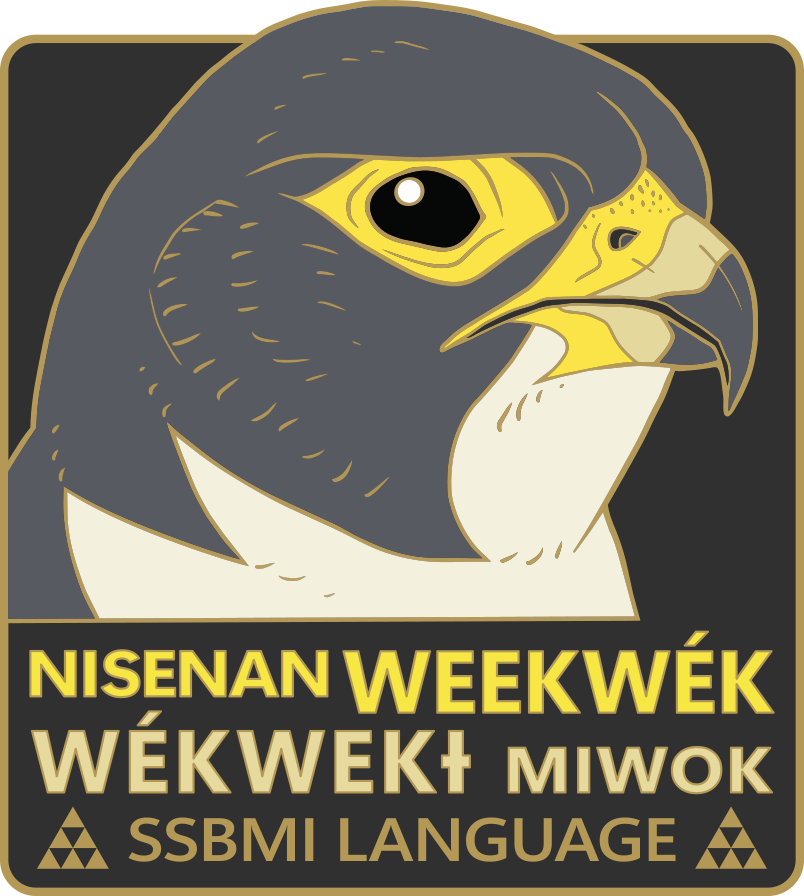
We held our 4th annual language trip to the Folsom Zoo on May 15, 2026. Thank you to everyone who participated! The Language Department gave out a new set of animal flashcards and an enamel pin featuring weekwék (peregrine falcon).

Peregrine Falcon (2026)

Nisenan

Weekwék

Miwok

Wékwekɨ


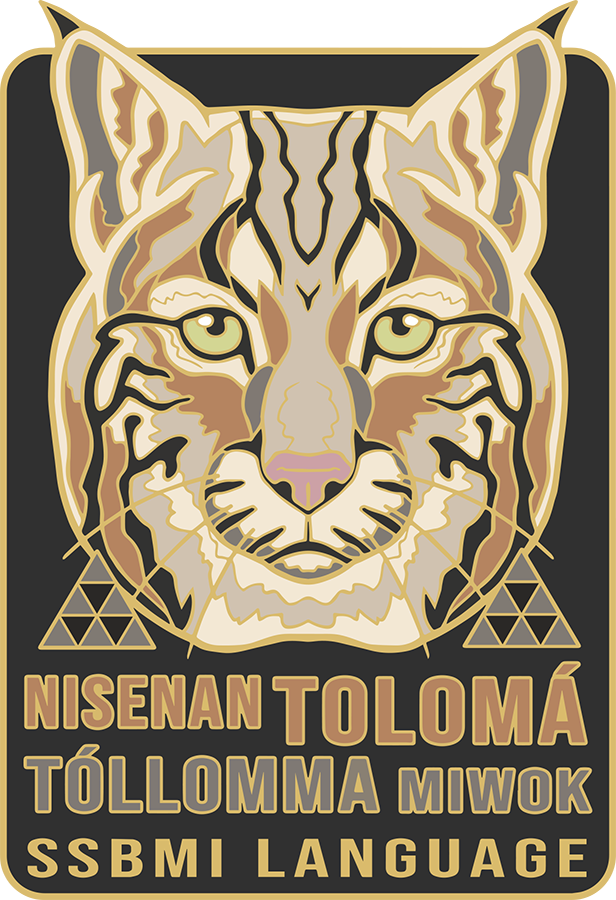
Bobcat (2025)

Nisenan

Tolomá

Miwok

Tóllomma


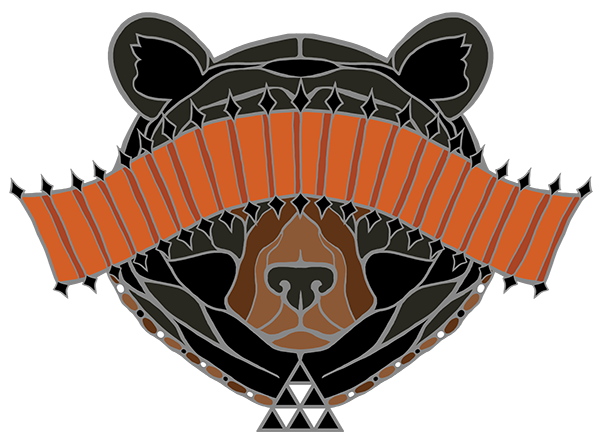
Black Bear (2024)

Nisenan

Emúl

Miwok

Úyyemɨ

All pin artwork created by Skye Anderson (SSBMI Language Department); © Shingle Springs Band of Miwok Indians.

Please contact us at language@ssband.org to check on the availability of these resources.


About the languages

Nisenáan (Nisenan)

Folsom is part of the Tribe's ancestral Nisenan homelands in the Sacramento Valley. The Nisenan language has been spoken in Folsom since time immemorial, and we are proud to be able to share the Tribe's heritage languages here at the Folsom Zoo.

Jane Winn Lewis, a Nisenan woman from the Folsom area, called this place Poló Oo, which means "Buckeye Rock" in Nisenan. Today, you can see this name on the Polo ’Oo Boat Launch at Black Miners Bar in the Folsom Lake State Recreation Area.

Poló Oo

'Folsom' (literally "Buckeye Rock")

The SSBMI Community has ancestral ties to the Valley and Southern Hill dialects of the Nisenan language through the Tribe's Matriarchs, Pamela Cleanso Adams and Annie Hill Murray Paris. Pamela spoke the Valley dialect and she, her brother Tom Cleanso, and her daughter Lillie Williams are responsible for passing on most of the knowledge we have of Valley Nisenan today. We have less direct information about Annie’s language; based on where she was from and documented language from her relations and associates, she likely spoke Southern Hill Nisenan.

The Nisenan language that we share on our language learning materials is from speakers of the Valley dialect like SSBMI Matriarch Pamela Cleanso Adams and her brother Tom Cleanso, as well as speakers of the Southern Hill dialect including William Joseph (a.k.a. Bill Joe), Ida Hill Starkey, Charlie Hunchup, and Amanda Winn. We also adapted names for "donkey", "goat", and "mint" from the Central Hill dialect as spoken by Lizzie Enos because we have not found names from the Tribe's heritage dialects.

Valley Nisenan and Southern Hill Nisenan are very similar to one another in their words and grammar, and they are more similar to one another than either one is to the other dialects of the Nisenan language (i.e. Central Hill Nisenan and Northern Hill Nisenan). You can learn more about the Nisenan language, the Tribe's language background, and where these dialects are spoken by checking out our "Language FAQ" pamphlet.


Míw’a (Northern Sierra Miwok)

There are several distinct and mutually unintelligible Miwok languages spoken in California. Northern Sierra Miwok is the northernmost of the three Miwok languages that are spoken in the Sierra Nevada foothills. It is spoken from the Middle Fork of the Cosumnes River southward to the area between the Calaveras River and Angels Camp. It is distinct from Plains Miwok, which is spoken in the valley south of Sacramento.

The Northern Sierra Miwok language we share comes from many speakers like Eph Cummings and others who worked with C. Hart Merriam in the early 1900s, and Queenie Miller, Elena McCauley, & Nicolas Villa Sr., who worked with linguist Catherine Callaghan on the Northern Sierra Miwok dictionary (1987). The word for fox which we share here is specific to the northern dialects of Northern Sierra Miwok spoken by Queenie Miller and others. Otherwise, to the best of our knowledge speakers of all dialects of Northern Sierra Miwok share these words and phrases.

You can learn more about the Tribe's language background and where Northern Sierra Miwok is spoken from our "Language FAQ" pamphlet.

About the website: This website is maintained by SSBMI Language Department staff in order to share Nisenan and Northern Sierra Miwok language learning resources with Tribal Members and other learners. Our team consists of: Jonathan Geary, Skye Anderson, & Richenda Ervin. Unless otherwise specified, the Nisenan and Miwok audio recordings that you will find on this website are of Jonathan, Skye, and Richenda.

We are all learners of the Nisenan and Northern Sierra Miwok languages, and we hope that you will join us in learning Nisenan and Miwok too!

If you have questions or want to know more about either language, you can reach out to us at Language@ssband.org.

Webpage last updated: 2026-06-09